5 min read
Collaboration Became the Priority. Focus Became the Gap.
Collaboration settings matter, but workplace planning must also protect the sustained individual attention that carries work forward.
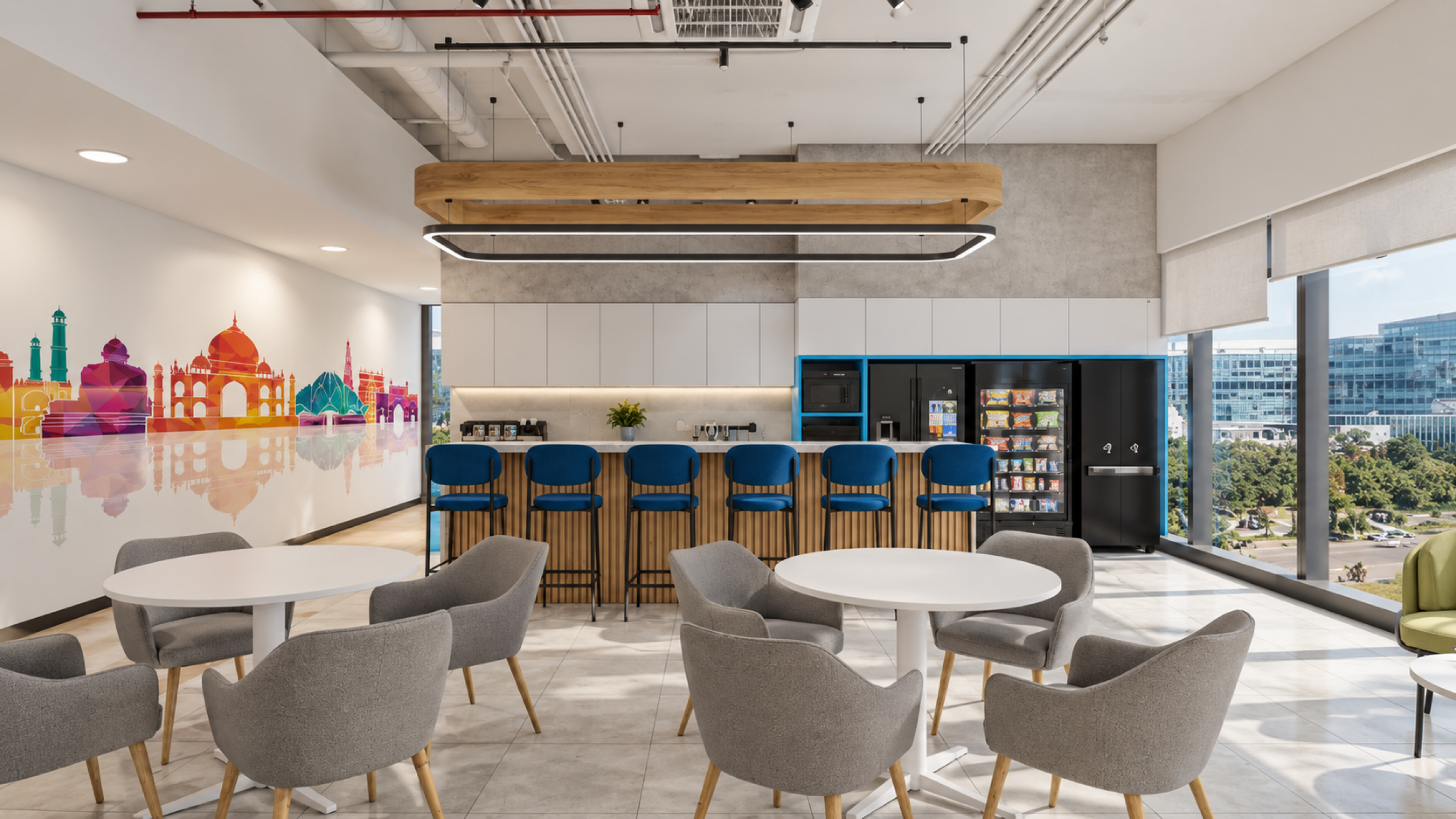
Most new workplaces are designed to make collaboration visible.
Open workstations. Informal breakout areas. Huddle rooms. Cafés. Meeting settings placed across the floor.
These spaces matter. But they represent only one part of the workday.
Reading, analysing, writing and making decisions still require sustained individual attention. When the workplace provides collaboration settings but does not properly protect focused work, the issue is not collaboration itself. It is an incomplete brief.
“The office should support discussion without making concentration difficult.”
The focus gap is visible in the data
The supporting research is clear on one point: focused individual work remains essential.
92% of employees rate focused, individual work as important to their role.
At the same time, office noise remains one of the weakest-performing workplace conditions. The research supplied for this article shows:
- 34% are satisfied with office noise globally
- 45% are satisfied with noise even in certified high-performing offices
- 33.4% are satisfied with noise in brand-new workplaces
A new office is not automatically a better environment for focus. New furniture, additional collaboration settings and a more open plan do not resolve the basic conditions that allow people to concentrate.
Noise is a planning issue, not a finishing issue
Noise is often addressed late in the process, after the planning logic is already fixed.
By then, the main decisions have already been made:
- Where workstations sit in relation to circulation
- Which teams work beside collaborative areas
- Where phone booths and meeting rooms are positioned
- How open settings connect to focus settings
- Whether calls, discussions and movement are separated from concentrated work
Acoustic panels can improve a space. They cannot correct a layout that places focused work beside its main sources of interruption.
This is why focus should be resolved at the same stage as adjacencies, circulation and room planning. It is not a material specification added after the floor plan is complete.
Collaboration and focus are not competing functions
A meeting can align a team, identify a problem or assign work.
The analysis, writing, technical development and decision-making that follow often happen individually.
The quality of collaboration depends on the quality of the work people are able to do between meetings. If the workplace supports conversation but makes individual work difficult, it weakens the work collaboration is supposed to enable.
The objective is not to reduce collaborative settings. It is to make both work modes function properly.
“Collaboration sets direction. Focus carries the work forward.”
What the workplace brief needs to test
A workplace should not be assessed only by how many collaboration settings it contains. It should also be tested for whether focused work can take place without avoidable interruption.
Before the plan is finalised, the brief should answer:
- Are focused workstations protected from main circulation routes?
- Are phone booths, huddle rooms and breakout areas buffered from nearby desks?
- Does the acoustic strategy match the activities planned beside each other?
- Are enclosed focus settings available when open workstations are not suitable?
- Are meeting rooms positioned according to their interruption impact on the wider floor?
These are technical planning decisions. They determine whether an office supports the full workday or only its most visible moments.
The office still needs to earn the commute
The office does not need to choose between collaboration and focus.
It needs to support both, with the right level of separation, acoustic control and spatial hierarchy.
The office is necessary. What fails is a workplace plan that treats concentrated work as an afterthought.
“A collaborative workplace is not one where everyone can talk. It is one where people can also think.”
Data at a glance
Focused individual work remains essential
92% of employees rate focused, individual work as important to their role
Individual work needs to be a core workplace planning input.
Source: Add source from supplied research visual before publishing
Noise remains a weak workplace condition
33.4% satisfied with noise levels in brand-new workplaces
Newness does not resolve acoustic performance.
Source: Leesman, The Workplace Experience Revolution Part 2, workdesign.com
Office noise satisfaction remains low
34% satisfied globally; 45% satisfied in certified high-performing offices
Acoustic performance needs to be addressed through planning, not only finishes.
Source: Add source from supplied research visual before publishing